
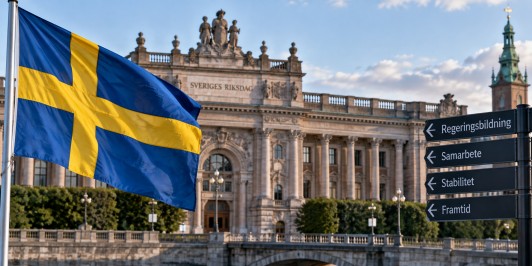
As Sweden navigates the aftermath of a tightly contested parliamentary election, political parties are engaging in coalition negotiations to form a new government. The centre-left bloc, led by the Social Democrats, has taken a slight edge with 176 parliamentary seats against the right-leaning bloc’s 173, with 95% of the votes tallied. The final results await the counting of overseas votes, anticipated later this week.
Social Democrat leader Magdalena Andersson is actively pursuing potential coalition deals to reclaim governance, while outgoing Prime Minister Ulf Kristersson and his centre-right coalition are exploring avenues to maintain their hold on power. The slim margin between the blocs has created an air of uncertainty regarding the next government’s formation. The Centre Party is poised to play a pivotal role in these discussions, although debates persist over its potential collaboration with the Left Party.
The Centre Party has expressed a desire for a stable government that leans towards a clear centre-right direction, explicitly ruling out cooperation with groups it deems as fringe political forces. On the other hand, several left-wing parties have voiced support for a governmental transition, warning that extended political impasse could necessitate another election. Despite a drop in support, the Sweden Democrats, who previously backed the right-wing government, have seen their policies on immigration, integration, and crime increasingly influence mainstream political discourse.
Kristersson remains patient, awaiting the final election results while keeping his strategic options open. His Moderates and their allies are tasked with the formidable challenge of securing a workable parliamentary majority, as the Liberals and Christian Democrats have dismissed the possibility of collaborating with the Social Democrats. The Swedish parliament is set to convene on September 28, with a potential vote for a prime minister slated for the following day. If these efforts to elect a prime minister are unsuccessful, Sweden may face the prospect of another election.
The coalition negotiations are expected to be protracted, potentially extending over weeks or even months. The process took 37 days to conclude following the 2022 election, while the 2018 election necessitated 134 days of negotiations. With neither political bloc enjoying a solid majority, the Centre and Left parties could emerge as decisive forces in shaping the next Swedish government.