
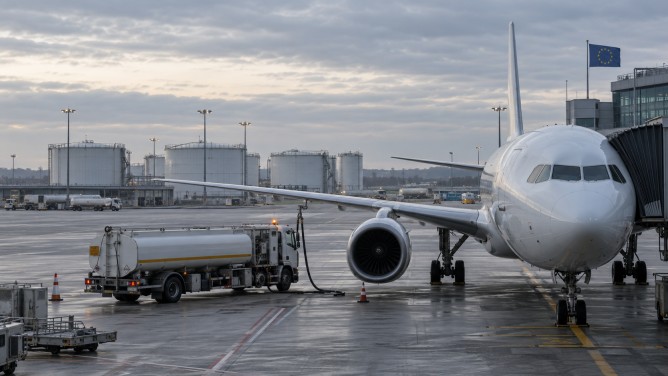
Europe is bracing for potential disruptions in jet fuel availability in the coming months, as regional stocks have dwindled to precarious levels. This shortage could significantly impact the aviation sector, with analysts predicting a deficit of approximately 510,000 barrels per day in the final quarter of the year.
Despite a notable uptick in jet fuel imports from Asia, which surged to around 129,000 barrels per day in September, and additional supplies from Canada, Nigeria, and the United States, the continent’s reserves remain alarmingly low. The situation is particularly pressing in key storage hubs across Amsterdam, Rotterdam, and Antwerp, where fuel levels recently hit a seven-year low as of mid-September.
While the Swedish Energy Agency has confirmed that supplies of gasoline, diesel, and jet fuel are currently stable, it has cautioned about potential short-term constraints specifically affecting aviation fuel in both Europe and Sweden. This warning underscores the delicate balance required to sustain adequate supply chains in the face of mounting challenges.
The ongoing geopolitical tensions in the Middle East have compounded these supply issues, exerting additional pressure on global energy markets. Recent attacks on energy infrastructure in Saudi Arabia have further exacerbated the situation, contributing to rising oil and gas prices throughout Europe.
As the continent navigates this precarious landscape, stakeholders in the aviation industry and energy sectors are closely monitoring developments to mitigate potential impacts on travel and transportation. The coming months will be critical in determining how Europe can adapt to these challenges and ensure the stability of its energy supplies.