
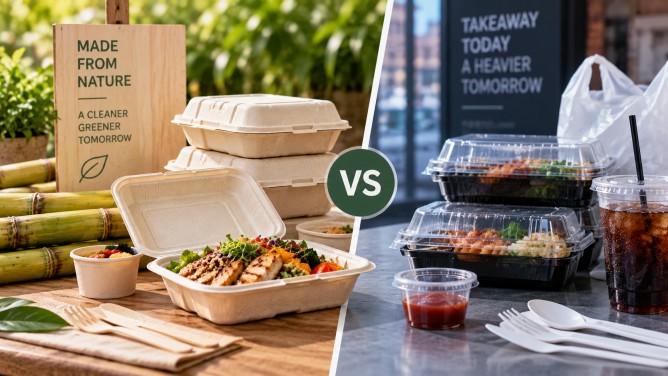
As businesses seek sustainable packaging solutions, the choice between bagasse and plastic food containers hinges on various factors, including menu type, holding time, sealing necessities, market regulations, and end-of-life infrastructure. Bagasse, derived from molded fiber, is particularly advantageous for hot entrees, rice dishes, pasta, catering trays, and compartment meals due to its rigidity and aesthetic appeal. Additionally, bagasse options with barrier enhancements can bolster performance against grease, moisture, and temperature variations, making it a viable option for companies focused on compostability. However, the effectiveness of bagasse in compostable applications depends on the finished product’s entire system, including coatings and lids, and the availability of composting facilities in the target market.
Conversely, plastic containers remain practical for chilled foods, products requiring visibility, high-moisture applications, and cost-sensitive programs supported by local waste management systems. Buyers are encouraged to compare specific plastic items with bagasse alternatives rather than assuming one material is universally superior. For many businesses, a phased transition to bagasse may be more feasible than an outright switch from plastic. Evaluating materials based on the food’s nature is crucial; for example, hot, oily, or sauce-laden meals require testing for deformation and leakage, while fried foods necessitate checks for condensation and texture retention.
Understanding the differences between standard, coated, and laminated bagasse products is essential for effective decision-making. Laminated bagasse may incorporate additional materials like PLA, PET, CPET, or EVOH, altering its compostability and recycling potential compared to unlaminated alternatives. The overall cost of packaging should consider factors beyond unit price, such as freight efficiency, storage needs, and operational impacts. Conducting controlled pilots with select high-volume menu items can provide businesses with valuable insights before making broader packaging transitions.
Grizzlies, a company offering OEM/ODM manufacturing solutions, supports businesses in transitioning to molded-fiber packaging. With a network of 11 production bases and over 280 automated machines, Grizzlies can handle significant manufacturing demands, offering customization for plates, bowls, trays, clamshells, and food containers. They provide potential buyers with sample evaluations, structural recommendations, and direct quotations, facilitating a seamless transition to sustainable packaging options. Businesses considering this transition can provide their current container specifications and market details to Grizzlies for tailored solutions.
Ultimately, the decision between bagasse and plastic should rest on specific criteria like rigidity, fiber-based benefits, available barriers, and end-of-life advantages for bagasse, as well as transparency, specialized sealing, and cost-effectiveness for plastic. Real-world testing with actual food items should always precede any large-scale packaging transition to ensure efficacy and sustainability.
Legal Disclaimer:
The information contained in this article has been provided by independent third-party contributors, clients, or content partners. We do not independently verify the accuracy, completeness, legality, ownership, licensing, or reliability of submitted content, including text, images, videos, trademarks, or other media materials. The submitting party is solely responsible for ensuring that all content, including images and media assets, complies with applicable copyright, trademark, licensing, and intellectual property laws. We disclaim liability for any unauthorized use of copyrighted or proprietary materials by third parties. If you believe that any content published on this platform infringes your intellectual property rights, kindly contact the author above for prompt review and resolution.