
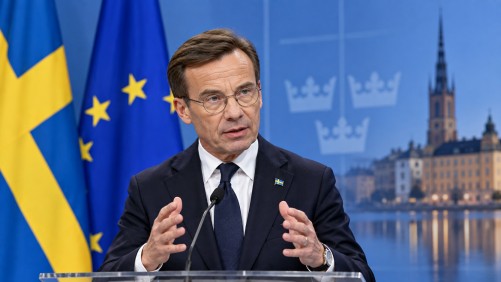
The resignation of Swedish Prime Minister Ulf Kristersson marks a significant shift in Sweden’s political landscape, as it opens the door for potential changes in key policy areas such as climate, healthcare, and immigration. Social Democrats leader Magdalena Andersson is now poised to attempt forming a new government after the center-left opposition secured a narrow majority in the recent general election.
Preliminary results from the election showed that left-leaning parties captured 176 seats, surpassing the right-leaning bloc that backed Kristersson by just three seats. This outcome reflects a voter call for a new direction in Sweden’s governance, with Andersson highlighting climate policy, schools, healthcare, elderly care, and immigration as urgent priorities.
In the wake of these results, Andersson has commenced discussions with the Left, Centre, and Green parties regarding possible cooperation. However, negotiations are anticipated to be complex due to divergent views on taxation, immigration, and climate policy, as well as potential disagreements over participation in a future government.
Kristersson, who has served as Sweden’s prime minister since 2022, formally submitted his resignation, prompting the parliamentary speaker to initiate the process of forming a new government. The Sweden Democrats, previously a major supporter of Kristersson’s government from outside the cabinet, experienced a decline in support and have now fallen to the third-largest party in the country.
Sweden’s parliamentary system often accommodates minority governments through agreements with other parties, a strategy Andersson is expected to pursue in her efforts to establish a stable governing coalition. This approach will be crucial as she navigates the intricacies of Swedish politics to deliver on the electorate’s desire for change.