
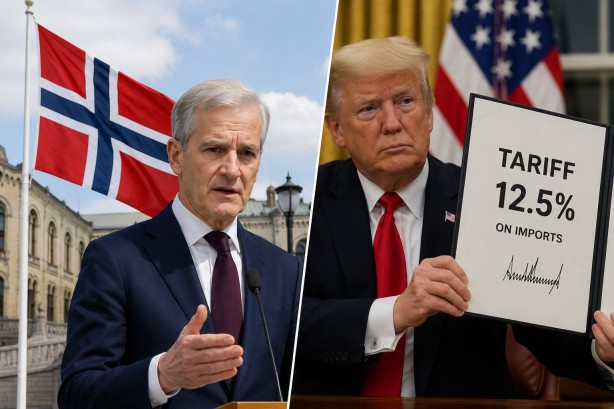
The Norwegian government has voiced strong objections to President Donald Trump’s recent decision to impose a 12.5% tariff on most imports from Norway. The tariffs, which took effect immediately, are deemed by Norway as both unfair and lacking justification. This new duty predominantly impacts Norwegian exports in sectors such as seafood, furniture, and industrial goods.
Norwegian Foreign Minister Espen Barth Eide has dismissed the U.S. justification for the tariff, which claims that Norway has not adequately prevented the importation of goods associated with forced labor. Eide emphasized that Norwegian legislation strictly bans the import of goods produced under forced or child labor conditions. In response to the U.S. action, Norway has formally communicated its objections to American officials.
Adding to the controversy, Norway has raised concerns regarding the disparity between the tariffs imposed on it versus those applied to the European Union and the United Kingdom, which are set at 10%. Despite this discrepancy, the Norwegian government has opted not to retaliate with counter-tariffs. Officials argue that imposing reciprocal tariffs would only lead to higher costs for Norwegian consumers, rather than resolving the issue.
Although the United States accounts for a small portion of Norway’s export market, there are concerns among officials and analysts that these tariffs could negatively impact the export of Norwegian seafood. Additionally, they warn that such measures undermine the broader principles of free trade, which both nations have traditionally supported.