
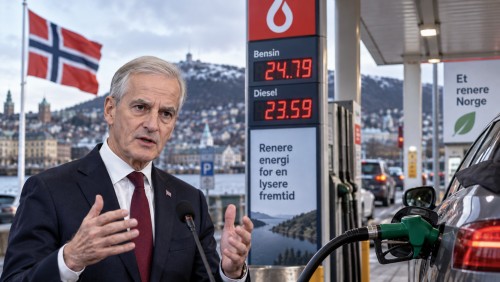
Norwegian households and businesses are bracing for financial strain as fuel prices soar, prompting political debate over potential tax relief. The surge in global oil prices has led to increased costs for petrol and diesel, intensifying calls for legislative action to alleviate the burden.
Prime Minister Jonas Gahr Støre’s government is under mounting pressure to reinstate a fuel tax reduction that expired on September 1. The Center Party, a key player in the coalition, plans to propose a reinstatement of the tax cut when Parliament reconvenes in October. This measure, supported by the Progress Party and the Christian Democrats, could decrease fuel prices by approximately NOK 4.50 per litre.
Sylvi Listhaug, leader of the Progress Party, has been a vocal advocate for immediate action, urging the Conservative Party to back the tax cuts and pushing for earlier parliamentary discussions. High fuel costs are particularly impacting sectors such as transport and construction, where fuel is a significant operational expense.
Within the Conservative Party, discontent is growing as more than 60 local chapters have expressed their support for reduced fuel taxes. This sentiment is especially strong in regions where residents rely heavily on personal vehicles due to limited public transport options.
Despite Norway’s significant role as an oil producer and the increasing adoption of electric vehicles, petrol and diesel remain crucial for many. The high fuel prices have even driven some consumers to cross into Sweden to seek cheaper alternatives. As the debate unfolds, the potential reinstatement of fuel tax relief could offer much-needed respite to those affected by rising costs.