
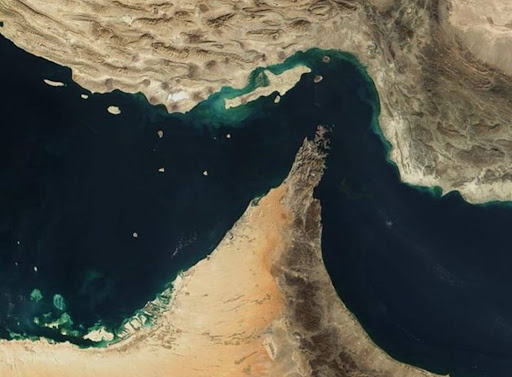
The Strait of Hormuz blockade shows no signs of ending as another week passes without a single allied government committing warships in response to President Donald Trump’s repeated appeals for a multinational naval coalition. Trump posted on Truth Social urging the UK, France, China, Japan, South Korea, and every oil-importing nation to send naval forces to the contested waterway alongside American forces, claiming many were already preparing to do so. The governments he named have collectively issued statements ranging from cautious deliberation to outright rejection, leaving the world’s most critical oil passage under uncontested Iranian control.
Iran’s closure of the strait — a retaliatory measure following US-Israeli airstrikes — has generated the worst oil supply disruption on record. Approximately one-fifth of global oil exports ordinarily flow through the narrow passage, and their sustained absence is driving energy prices sharply higher across international markets. Tehran has attacked sixteen tankers since the conflict erupted in late February and has made explicit threats to destroy any vessel heading for American, Israeli, or allied ports. The additional threat of mine deployment in the waterway has made the strait one of the most hostile maritime environments on the planet.
France continued to hold the firmest position against intervention. Defence Minister Catherine Vautrin reiterated that no French ships would be sent while active hostilities continued, describing the country’s stance as purely defensive. President Macron’s earlier proposal for a defensive escort mission remains tied explicitly to a reduction in fighting that shows no sign of materialising. The UK confirmed it was still reviewing options including mine-hunting drone technology. Japan’s ruling Liberal Democratic Party official maintained that the threshold for deploying warships was very high. South Korea said it was examining available options from every possible angle before making any decisions about how to respond.
The EU’s Aspides naval mission, currently running three ships from France, Italy, and Greece against Houthi threats in the Red Sea, has been under discussion as a potential vehicle for extending maritime protection to the Persian Gulf. EU foreign affairs ministers are reported to be examining the possibility of expanding the mission’s mandate, but the effort faces significant internal obstacles. German Foreign Minister Johann Wadephul has publicly described the current Aspides operation as ineffective, casting serious doubt on the political will for expansion. The absence of French warship availability and Germany’s scepticism together represent major barriers to any EU-based coalition response to the Hormuz crisis.
China continues to be the most active diplomatic player despite being the least vocal publicly. Beijing is reportedly in ongoing discussions with Tehran about facilitating safe passage for oil tankers through the strait, a diplomatic process that could deliver some relief without requiring military confrontation. The Chinese embassy in Washington reiterated Beijing’s commitment to strengthening communication with relevant regional parties and playing a constructive role in achieving peace. US Energy Secretary Chris Wright expressed continued optimism about China’s potential contribution to resolving the standoff, noting that dialogue with multiple nations was actively underway as the world continues to search for a workable path out of the deepening crisis.
Hormuz Blockade Enters New Week With No Naval Solution on the Horizon
58